
The Clerk of the District Court Records Department
For court records in Sedgwick County, the controlling office is the Clerk of the District Court and its Records Department, not the county clerk. The Records Department maintains microfiche, microfilm, and electronic records of the district court. It holds marriage licenses, civil, criminal, domestic, probate, support division, and traffic court records. The office sits on the 6th floor of the main courthouse, and its clerk hours run weekday mornings and afternoons. Bernie Lumbreras is listed as Clerk of the District Court, with James Fleetwood as Chief Judge and Ellen House as District Court Administrator.
DC18 Records Department
525 N Main St, 6th Floor
Wichita, KS 67203
(316) 660-5900
Mon-Fri 8:00 AM-4:00 PM
The county KORA contact page lists the district court agency contacts, shown below from Sedgwick County.
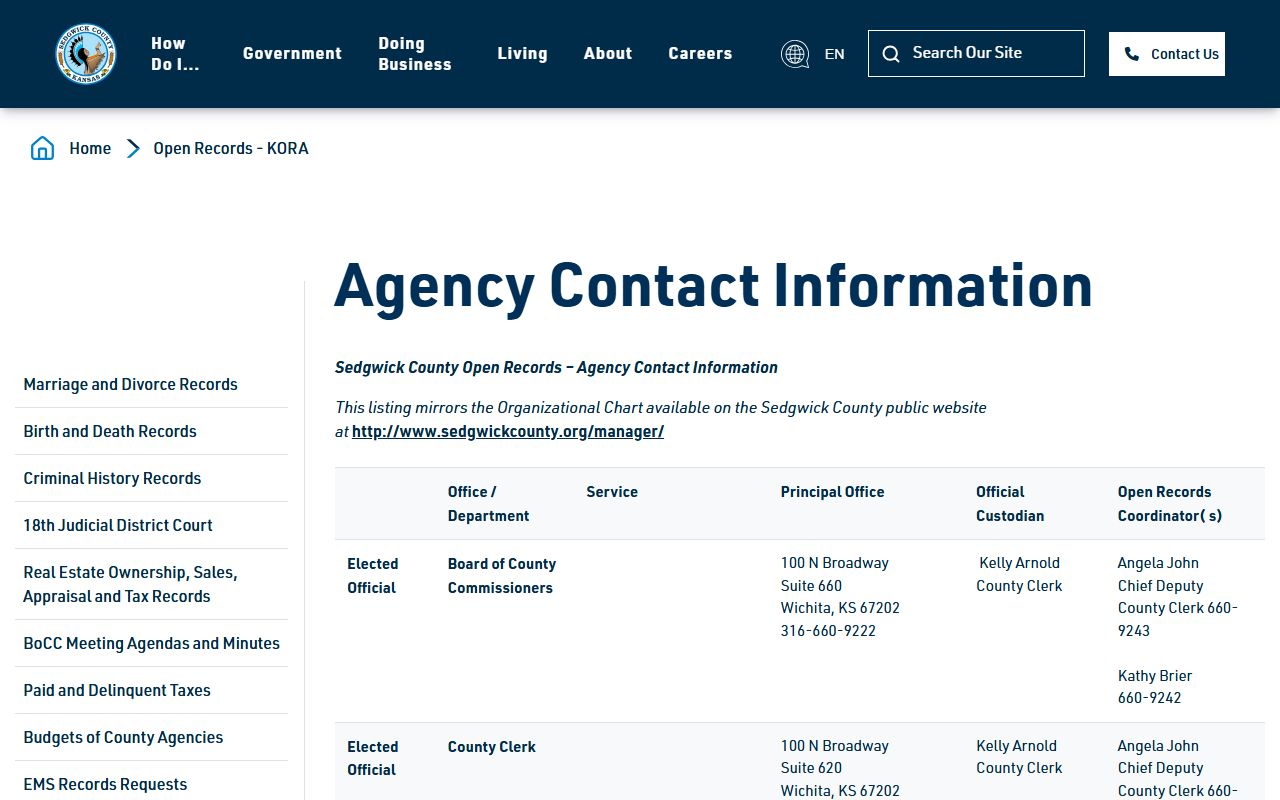
It names the court custodians and the contact details for records. The Records Department is the central counter for the whole 18th Judicial District, so it fields requests for every case type the court handles, from a routine traffic file to a decades-old probate estate. The Records Department offers three ways to reach a file. You can visit the 6th-floor counter and view records on public access computers, search online through the statewide portal, or send a written records request by mail or email. The email for the Records Department is sg.micro@kscourts.gov. Older records that live only on microfilm are best handled by a direct request, since they will not appear in the online index.
Clerk of the District Court vs County Clerk
This is the distinction that trips up most people. The Clerk of the District Court is part of the Kansas Judicial Branch and keeps court case files. The Sedgwick County Clerk is a county-government elected office, currently held by Kelly Arnold, that handles commission records, elections, and county administration. The county is explicit that the 18th Judicial District Court is not organizationally part of county government, even though both sit downtown. So a divorce decree, a criminal case file, or a probate record goes to the court clerk, while a county budget or commission record goes to the county clerk.
The county's KORA pointer for the district court is shown below from Sedgwick County.
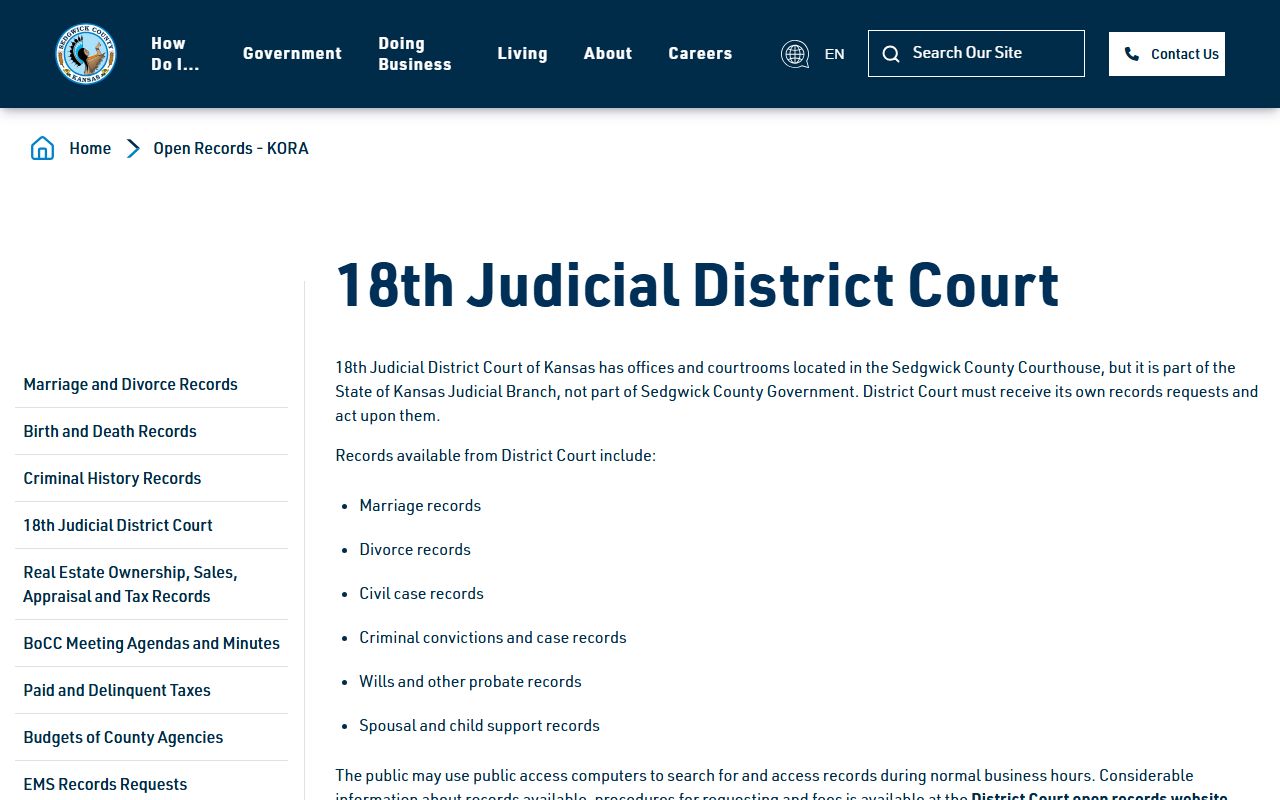
It tells requesters that court records run through the judicial branch, not county KORA. This matters for timing as much as accuracy. A KORA request sent to the county for a court file does not start the court's own process; at best the county refers it, and the days spent waiting are lost. Sending the request to the Clerk of the District Court from the start is the faster path, and it is the only path for a certified copy. The FAQ page answers more common questions about which office holds which record.
Court Departments the Clerk Serves
The Clerk of the District Court does not hold one undivided pile of files. The court is organized into departments, and the clerk's staff support each one. Knowing which department made a record helps you ask for it by the right case type and floor. The main courthouse on North Main holds most of these, while probate and juvenile functions sit at a separate building on East Morris Street.
- Civil Department - civil chapter 60, limited civil chapter 61, small claims, and transcripts.
- Criminal Department - felony and misdemeanor cases, search warrants, and inquisitions.
- Family Law Department - divorce, paternity, support, and protection cases.
- Traffic Department - county and highway citations and municipal appeals.
- Probate Department - estates, guardianships, conservatorships, and adoptions.
Each department both creates and keeps its own records, so the office that made a document is usually the one that can certify it. Volume gives a sense of the workload behind these files, with roughly 27,000 civil cases, 8,500 family cases, 20,000 traffic citations, 3,000 criminal cases, and 2,700 probate cases filed in a year. The District Court page profiles these departments and the judges who run them.
How to Request a Certified Copy
A certified copy is the official version of a court document, accepted in legal matters where an uncertified printout is not. The Records Department certifies copies from the case file. You can search the case online first, but the portal display is not certified, so the request for a certified copy goes to the clerk. The office offers three access methods: in person at the 6th-floor counter, online through the statewide portal for searching, and a written records request form.
- Find the case number through the portal or prior paperwork.
- Complete the DC18 records request form with the case and party details.
- Submit in person, by mail, or by email to the Records Department.
- Pay the copy and certification fee from the posted schedule.
- Receive the certified copy with the clerk's seal.
The form is short, but accuracy speeds it up. A case number is the cleanest way to identify a record, so include it when you have one. If you do not, the party names and an approximate filing date help staff locate the file. Tell the office whether you want to inspect the record or receive a certified copy, since those are handled differently. The records request form asks for the fields below.
| Field Label | Type | Notes / Format |
|---|---|---|
| Requester name | Text | Who is asking for the record. |
| Contact information | Text | Phone, email, or mailing address. |
| Case number | Text | Used to identify the court record. |
| Party names | Text | Used when the case number is unknown. |
| Record description | Text | What to inspect or copy. |
| Court / department | Text | The department that holds the record. |
Clerk of the District Court Fees
The clerk charges fees set by court schedules and state law. Filing a case carries a docket fee, and copies and certifications carry their own charges from the posted schedule. A few fixed amounts come from the small claims forms list, including a sheriff service fee and an appeal filing fee. Confirm the current copy and certification price with the Records Department, since the schedule controls.
| Item | Amount |
|---|---|
| Small claims sheriff service | $15.00 |
| Small claims notice of appeal | $197.00 |
| Garnishment surcharge (small claims) | $12.50 |
| Copy / certification | Per posted DC18 schedule |
Docket fees are posted on the DC18 docket fees page, separate from copy fees. A fee waiver, called a poverty affidavit, may be available for people who cannot pay, and that affidavit is not posted on the public portal. Court clerks can explain procedure and provide fee information, but they cannot give legal advice or tell a person what to file, so a question about strategy belongs with an attorney rather than the counter staff.
Marriage License Returns and Vital Records
The clerk also handles marriage license records. After a ceremony, the completed license is returned to the Records Department, which then conveys the record to the state Office of Vital Statistics. The county confirms that marriage and divorce records are maintained by the District Court rather than county government. The county marriage and divorce pointer page is shown below from Sedgwick County.
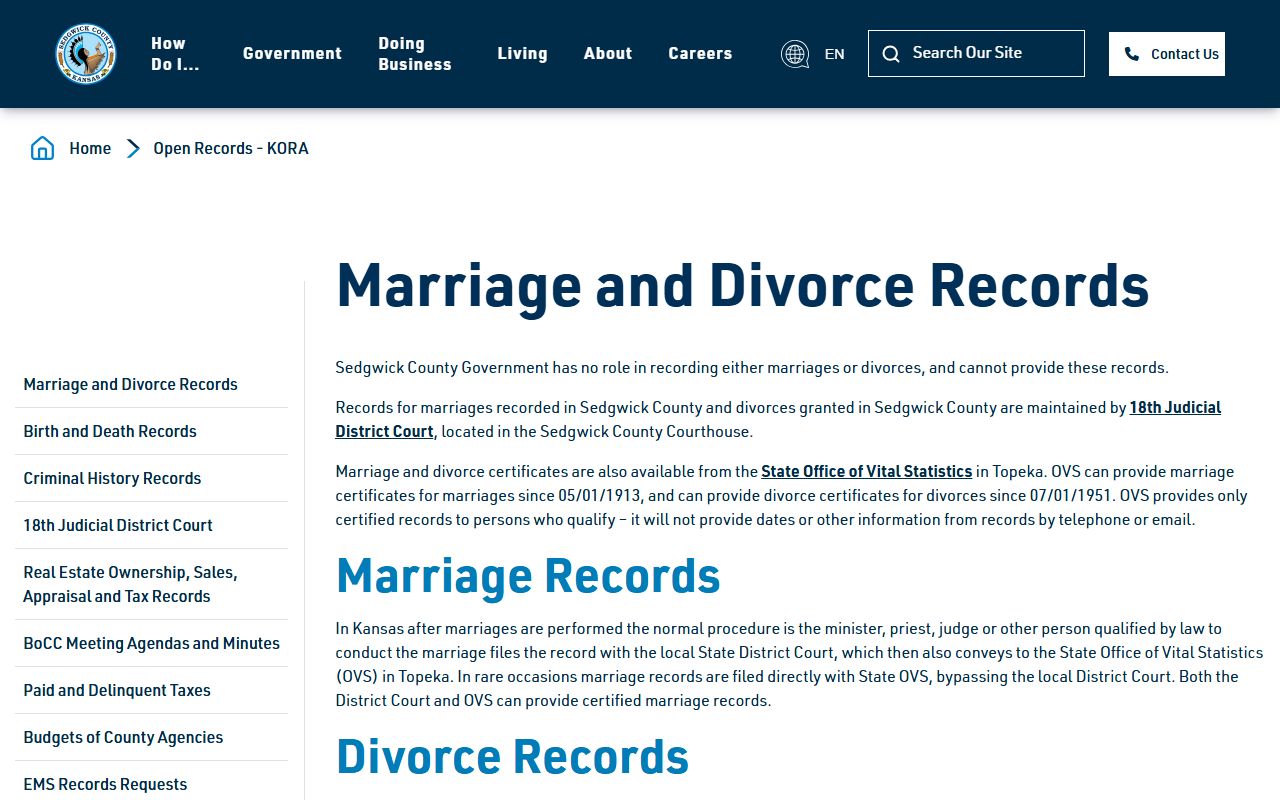
This return step is what makes a certified marriage record possible later, so a couple should confirm the officiant filed the completed license. For the full marriage and divorce process, see the marriage and divorce records page.
Related County and Court Offices
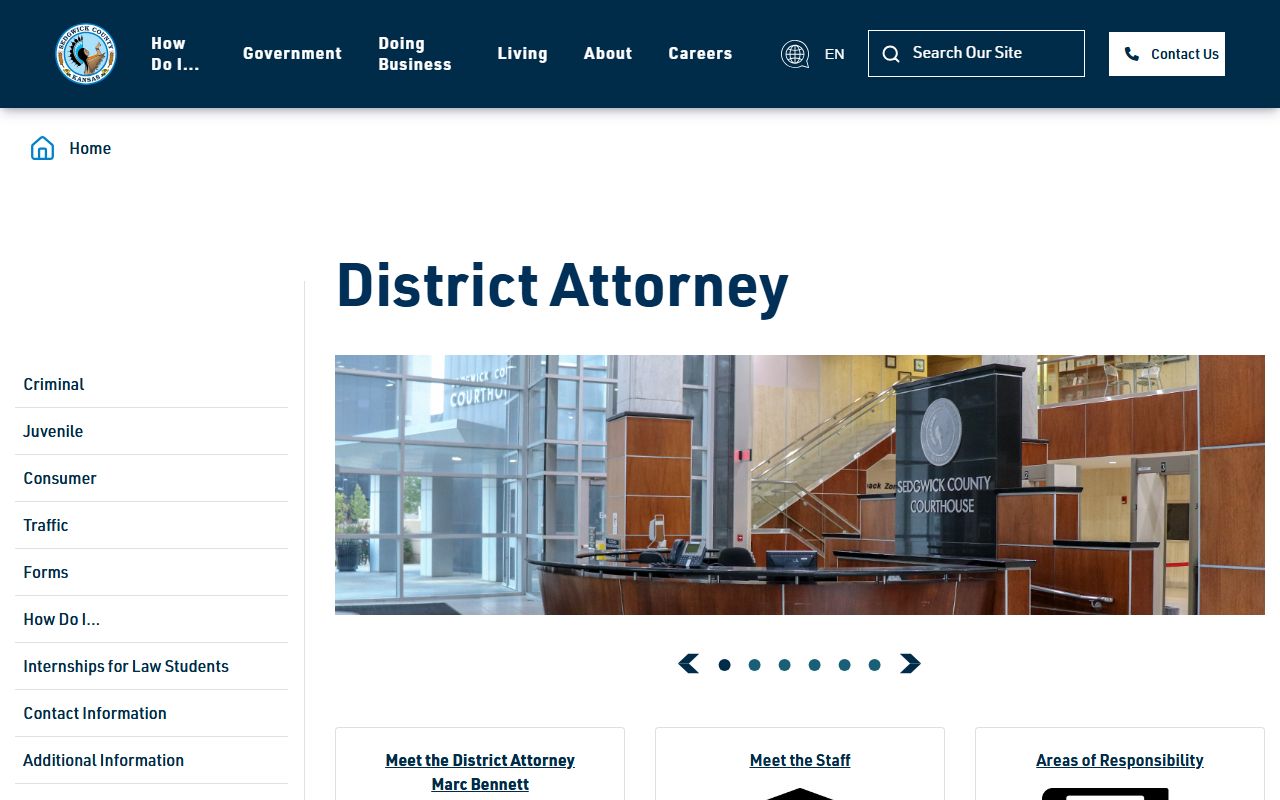
Several offices sit near the clerk and are easy to confuse with it. The register of deeds, currently Tonya Buckingham, records land documents and liens at a county-government office. The District Attorney prosecutes criminal cases for the 18th Judicial District and is also a state judicial agency rather than a county department. The DA office is led by Marc Bennett and handles criminal, juvenile, consumer, and traffic functions, plus victim services. None of these offices is the place to request a court case file, which stays with the Clerk of the District Court.
The District Attorney office page is shown below from Sedgwick County.
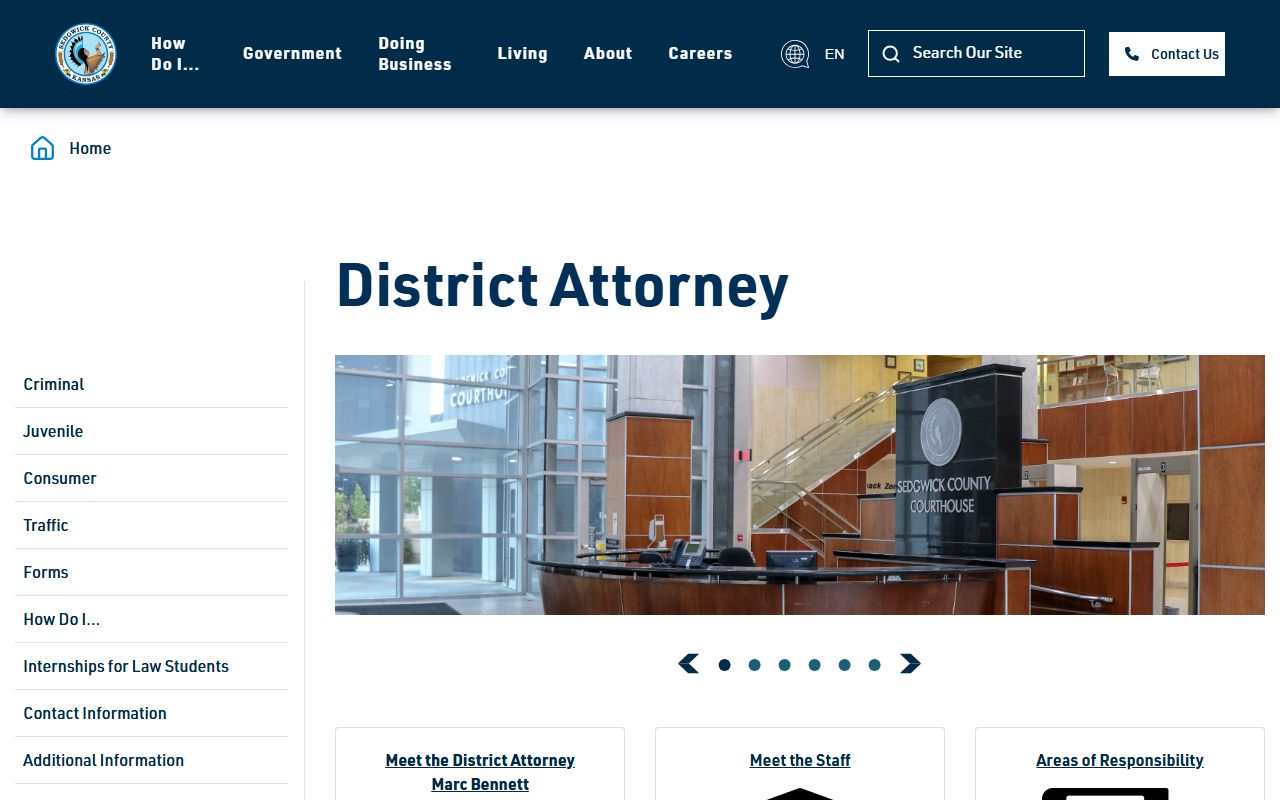
An alternate path to the same office is shown here from the county DA page.
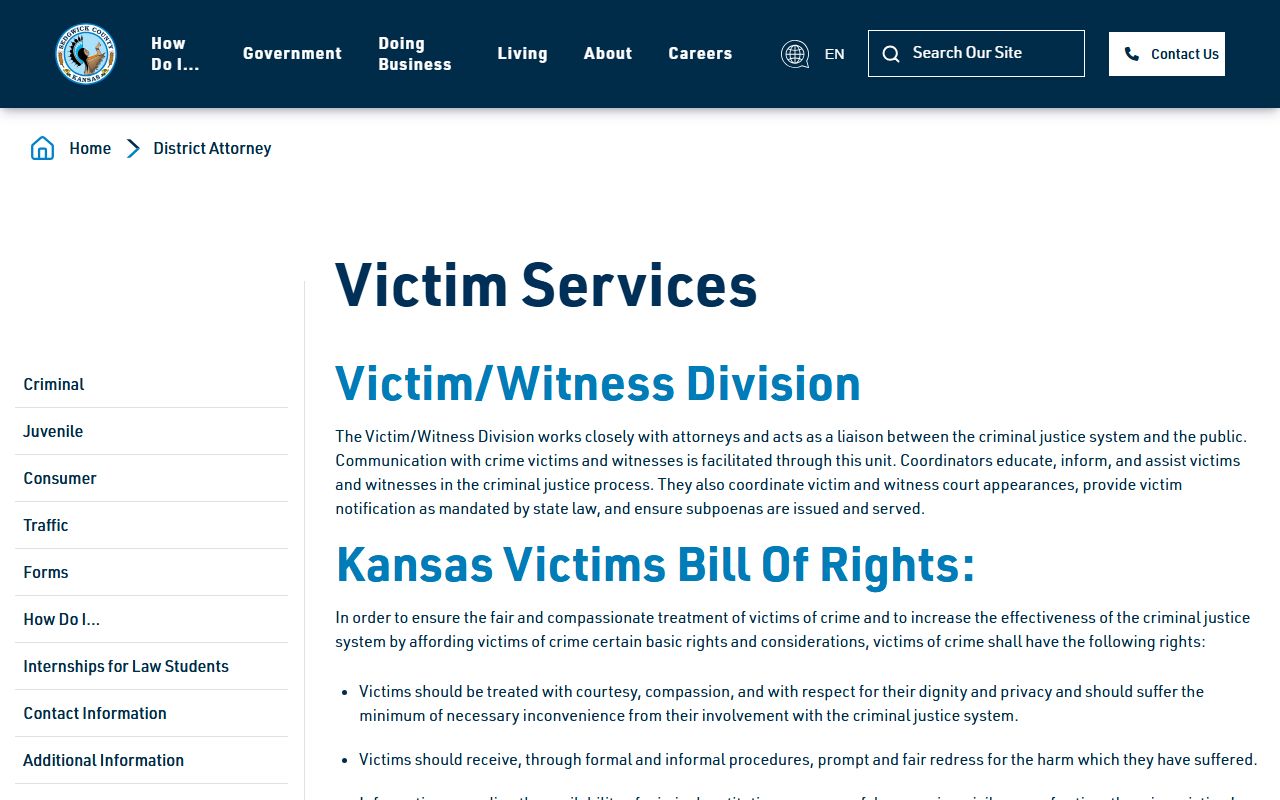
The DA also runs victim services, shown below from the victim services page.
The takeaway is simple. The court clerk holds case files, the county clerk holds county-government records, the register of deeds holds land records, and the District Attorney prosecutes cases. Matching the record to the office is half the work of any request. For criminal case files behind a prosecution, use the court records page and the arrest records page.