
How to Search Sedgwick County Traffic Court Records
Traffic cases are searched through the same statewide portal used for other court records. You can look up a case by party name, case number, or citation number where the portal exposes that filter. The District Court Traffic Department processes the citations and prepares the cases, and it also handles warrants, suspensions, and abstracts sent to the motor vehicle division. The traffic department page is shown below from DC18.
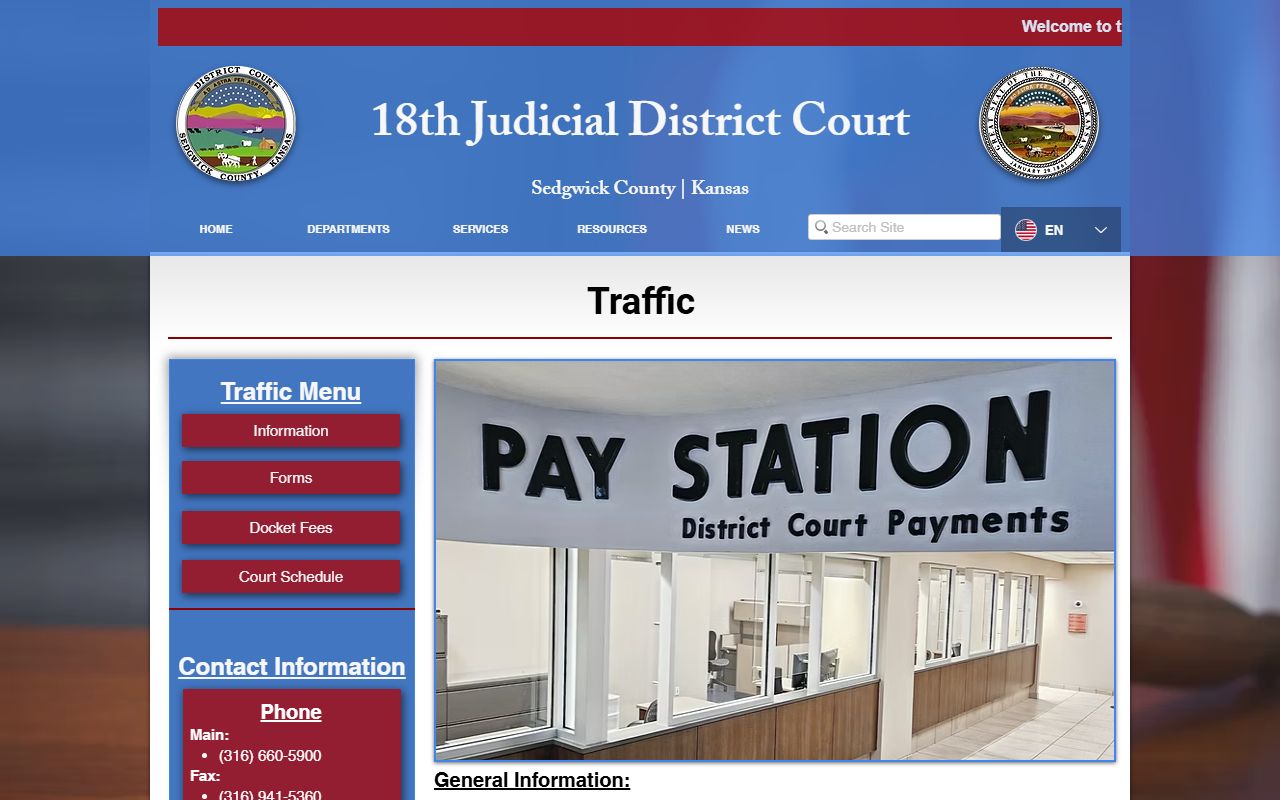
The department reports a heavy load, about 20,000 traffic citations filed a year. Have your citation or case number ready, since it is the cleanest way to find the right file. The Traffic Department sits on the 7th floor of the main courthouse at 525 N Main, with clerk hours on weekday mornings and afternoons. Records requests go to the Records Department or the email used for court records, and the same statewide portal that holds civil and criminal cases also carries traffic case information. For a quick name check, the daily docket can confirm whether a traffic case is set for a hearing today.
Which Courts Handle Traffic Cases in Sedgwick County
Traffic cases split between two court systems, and the split matters. A ticket written inside Wichita city limits often starts in Wichita Municipal Court. A citation from the Sedgwick County Sheriff or the Kansas Highway Patrol on a county or state highway outside city limits goes to the District Court Traffic Department. The District Court also hears appeals from municipal courts. So the same kind of violation can land in a different court depending on where it happened and who wrote the ticket.
Reading the citation tells you where to look. The court name printed on the ticket points you to the right office. If it names the District Court, use DC18 Traffic; if it names a municipal court, contact that court unless the case is on appeal. The court records page covers the statewide portal these cases share.
Types of Traffic Cases on Record
Traffic records run from minor to serious. Most are infractions like speeding or equipment violations, but the department also handles offenses that carry bigger consequences. The range includes speeding, no insurance, driving while suspended, equipment violations, and DUI. A DUI is also a criminal and public-safety matter, so it follows separate rules even though it can appear in a traffic context.
- Speeding and moving violations.
- No proof of insurance.
- Driving while suspended or without a valid license.
- Equipment and registration violations.
- DUI and other alcohol-related driving offenses.
The mix is why a traffic record can mean very different things, from a paid fine to a license suspension or a criminal case. Many DC18 traffic cases come from the Sedgwick County Sheriff or the Kansas Highway Patrol, since the District Court handles violations on county and state highways outside city limits. A municipal appeal can also reach the District Court, which means a case that began in a city court can later show in the district record. Reading the agency and the court on the citation explains how a case got where it is.
What Sedgwick County Traffic Court Records Show
A traffic case file holds a predictable set of fields. It ties the citation to a court case, names the driver, and tracks the charge, the hearing, and the outcome. Money items and any license action also appear. This is the court record of the case, which is separate from the state driver record discussed below.
| Field | What It Shows |
|---|---|
| Citation / case number | Links the ticket to the court case. |
| Driver name | The person charged in the case. |
| Violation details | Date, time, location, and statute or ordinance. |
| Charge description | Speeding, no insurance, DUI, and the like. |
| Disposition | Plea, diversion, conviction, dismissal, or amendment. |
| Fines and costs | Amounts owed and payment status. |
| License / warrant action | Suspension, abstracting, or failure-to-appear warrant. |
Searching by Citation Number vs by Name
You have a few ways to find a traffic case, and each has tradeoffs. A citation number or case number points straight to one file. A name search is useful when you do not have the paperwork, but common names return many results, so add detail to narrow them. The portal may also offer location and case-type filters.
| Field Label | Type | Required | Notes / Format |
|---|---|---|---|
| Party Name | Text | No | Search by driver name; narrow common names. |
| Case Number | Text | No | Best if printed on the notice or prior docket. |
| Citation Number | Text | No | An advanced filter in the Kansas portal. |
| Location / Case Type | Dropdown | No | Use Sedgwick County or traffic where available. |
Keep the court file separate from the driver-license tool, which uses different identifying information.
Paying or Contesting a Sedgwick County Traffic Ticket
What you do with a ticket depends on the court and the charge. Some tickets can be paid online, while others require a court appearance. Paying a ticket can count as a plea of guilty, so do not pay if you intend to contest. The steps below cover the common path.
- Read the citation to find the court and any appearance date.
- Look up the case in the court portal by name, case, or citation number.
- For payment, use the court-linked online payment tool if the case is payable.
- To contest, follow the appearance instructions and do not pay first.
- If you missed a date, contact DC18 Traffic quickly to avoid a warrant or suspension.
Important: DUI, mandatory-appearance, warrant, or suspended-license cases may not be payable online and can require contacting the court directly.
Court Traffic Records vs State Driver Records
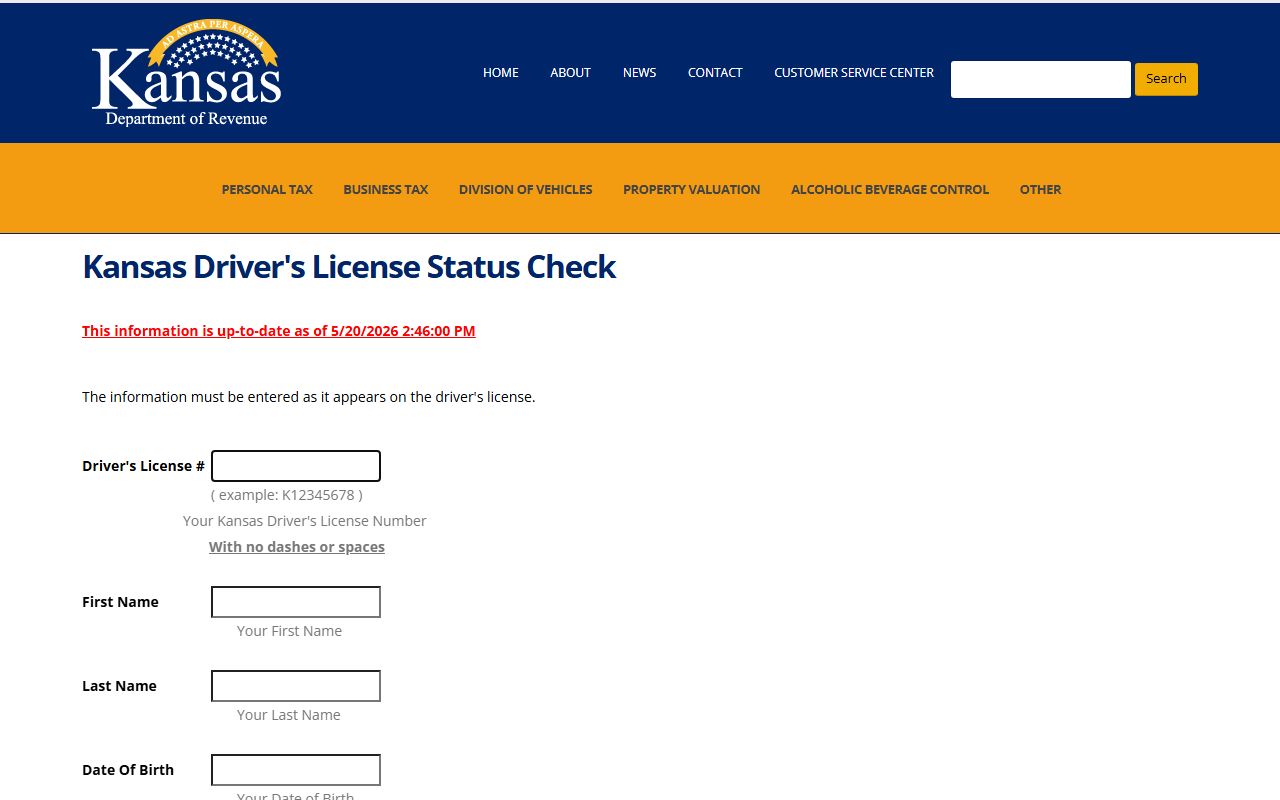
This is the distinction drivers most often miss. The court traffic record is the case file held by the District Court. The state driver record is held by the Kansas Department of Revenue and tracks license status and history. They are different files kept by different agencies, and one does not replace the other. A court case can resolve while a license issue remains, or a license can be valid while a case is still open.
The Kansas driver license status checker is shown below from the Kansas Department of Revenue.
| Point | Court Traffic Record | State Driver Record |
|---|---|---|
| Custodian | Sedgwick County District Court | Kansas Department of Revenue |
| Shows | Case filings, hearings, disposition, fines | License status, suspensions, driver history |
| Access | Kansas court portal or Records Department | State driver-license tools |
| Does not replace | Proof of current license validity | The full court case file |
Public Access to Traffic Court Records
Traffic case information is broadly public, but some documents are not. Kansas Supreme Court Rule 22 makes certain traffic citations inaccessible as documents through the public portal, even when case information is available. Poverty affidavits are excluded, and unexecuted warrants are not public. Juvenile traffic matters may carry confidentiality depending on the case and the age of the driver.
The broader open-records framework is the Kansas Open Records Act, K.S.A. 45-215 and following, which governs county records, while court records follow the Supreme Court rules. The public records page explains the open-records side, and the court records page covers the portal limits.
CDL and DUI Traffic Cases
Commercial drivers and DUI cases follow stricter rules. The District Attorney's traffic diversion program excludes commercial-driver violations, so the build does not promise diversion to CDL holders. DUI appears among the traffic case range, but it is also a criminal and public-safety offense with separate diversion rules. The DA notes a separate diversion program for certain first-time DUI offenders and open-container violations.
The Kansas Department of Revenue site, which handles license and driver matters, is shown below from KDOR.
A DUI case can move toward criminal court, so the arrest records page covers that side. For a commercial driver, even a routine ticket can carry career consequences, since CDL rules treat violations more strictly than they treat the same offense for a private driver. That is why the diversion program leaves CDL holders out and why a commercial driver should weigh a contest or a lawyer before paying a ticket that counts as a plea.
Diversion and Defensive Driving
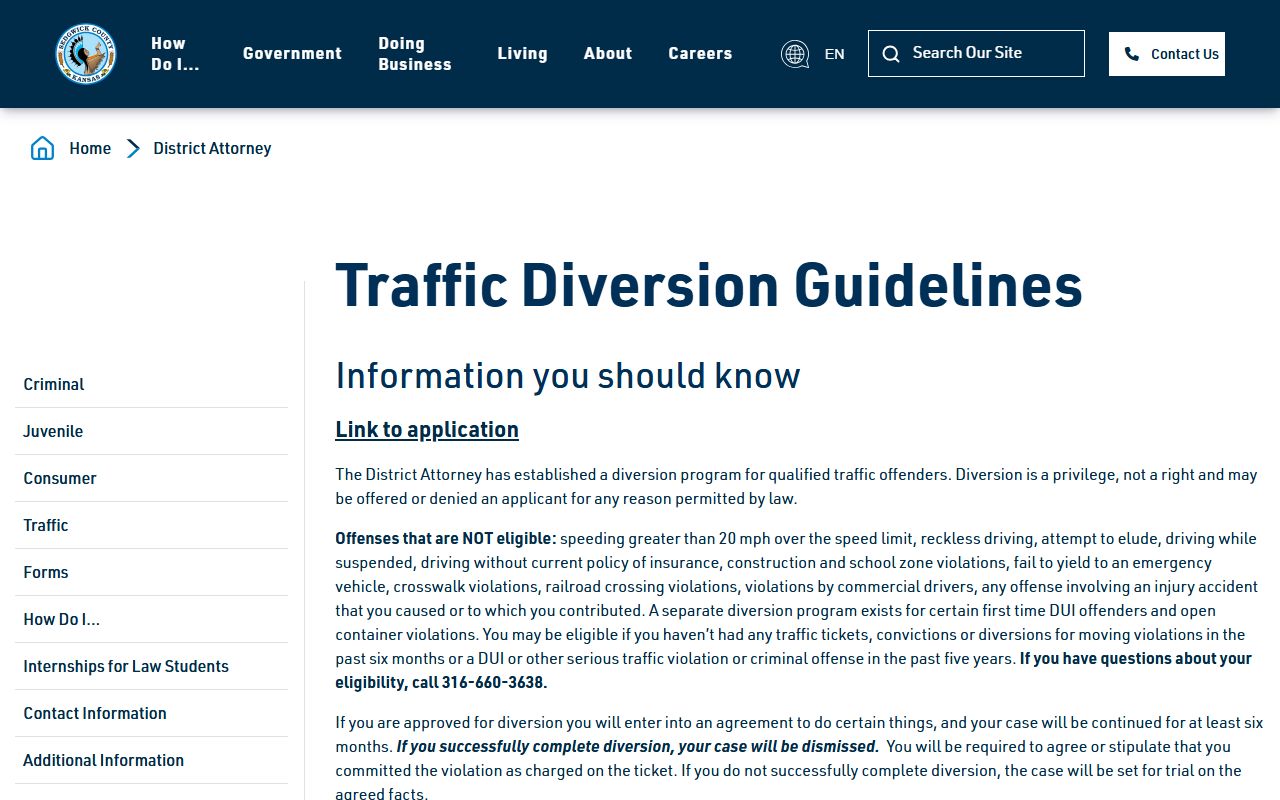
Diversion can keep a conviction off a record for some drivers. The District Attorney runs a traffic diversion program for qualified offenders, but it excludes many serious or safety-sensitive violations. Excluded examples include speeding more than 20 mph over the limit, reckless driving, eluding, driving while suspended, no current insurance, construction or school zone violations, failure to yield to an emergency vehicle, commercial-driver violations, and injury accidents the applicant caused.
The traffic diversion guidelines are shown below from the Sedgwick County DA.
A completed diversion or defensive driving option can change how a traffic record reads.
Sealing or Expunging Traffic Records
Some traffic matters can be cleared over time. Kansas expungement statutes can reach qualifying records, with K.S.A. 21-6614 covering many convictions, arrest records, and diversion agreements. Once a court grants an expungement, the case drops off the public portal. Whether a specific traffic matter qualifies depends on the offense, the waiting period, and any unpaid obligations.
Failure to appear or pay can work the other way, adding a warrant and a license suspension. The Traffic Department handles warrants, suspensions, and abstracts to the motor vehicle division, so a missed date can trigger more than a late fee. Acting quickly on a missed traffic matter keeps a small problem from growing into a suspended license or an arrest. For drivers facing hardship, DC18 also links a pro se motion process. The warrant records page covers traffic warrants and how to resolve them.
Fees for Traffic Record Copies
Traffic record copies and certifications follow the court's posted schedule, like other court records. Fines and court costs are set per case and shown in the case file. Confirm copy and certification prices with the Records Department before you pay, since the schedule controls.
| Item | Amount |
|---|---|
| Traffic fine and court costs | Set per case in the record |
| Copy / certification | Per posted DC18 schedule |
For certified copies, see the Clerk of the District Court page.