
The Kansas Open Records Act in Sedgwick County
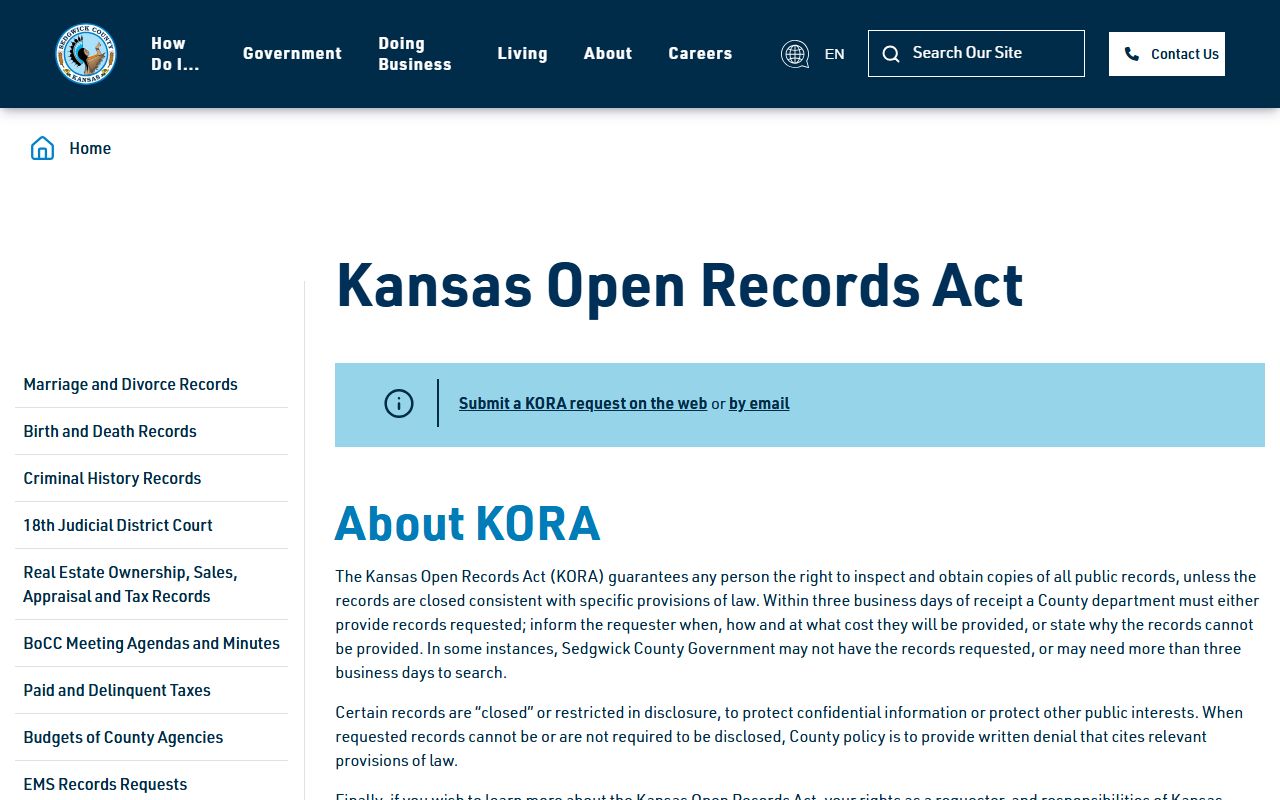
Public access in Kansas rests on the Kansas Open Records Act, often called KORA. The county states that KORA gives any person the right to inspect and obtain copies of public records unless those records are closed consistent with law. A department must respond within three business days, either by providing the records, stating when and at what cost it will provide them, or explaining why it cannot. KORA does not require an agency to answer questions, create new records, or prepare a new report; it applies to records that already exist.
The county KORA overview page is shown below from Sedgwick County.
The act itself sits in the state statutes, shown here from the Kansas Open Records Act article.
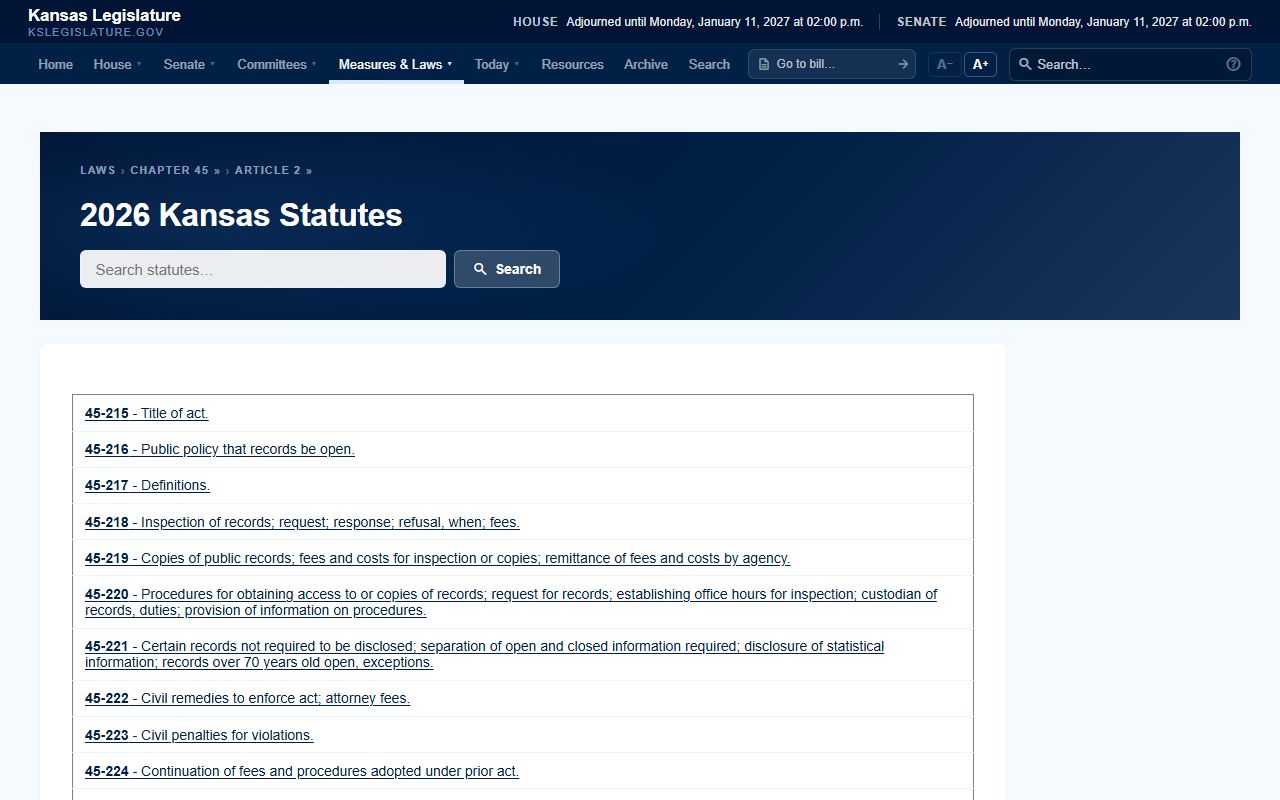
The article, K.S.A. 45-215 and following, sets the policy that records be open. Several sections work together. K.S.A. 45-216 states the open-records policy, K.S.A. 45-217 defines key terms, and K.S.A. 45-220 lets agencies adopt procedures and require specific requests. These definitions matter locally because the county uses them to explain that the District Court and District Attorney are state judicial agencies, not county departments, which changes where a request should go.
County Records vs Court Records
The most useful thing the county does is tell you when a record is not its own. The county explains that the 18th Judicial District Court is part of the Kansas Judicial Branch, not county government, and it points marriage and divorce requesters to the District Court and the state instead. So a KORA request to the county is right for county-government files but wrong for a court case file. Sending the wrong request to the wrong custodian wastes the three-day clock and often ends in a referral.
Use county KORA for sheriff records that are not already online, county budgets and commission records, and records held by the county clerk, register of deeds, appraiser, treasurer, and election office. Use the District Court for civil, criminal, family, probate, support, and traffic case files, plus certified copies. The court records page and the Clerk of the District Court page cover the court side. This is not a small distinction. A divorce decree, a criminal case file, and a traffic ticket are all court records, even though many people assume the county clerk keeps them. The county clerk is a separate elected office with its own duties, so a request for a court file sent there will be redirected at best.
Records the County and Its Offices Hold
County government keeps a wide range of records beyond the courts, and several elected offices each hold their own. The county clerk handles commission records, election material, and certain administrative files. The register of deeds records land documents, deeds, and liens. The appraiser, treasurer, and election office each maintain records tied to their work. The Sheriff's Office holds law enforcement records, some of which are online and some of which require a request. Knowing which office owns a record is the single biggest factor in a fast answer.
Land records deserve a special note. A deed, a mortgage, or a lien is recorded with the register of deeds, not the court, even though a court judgment or a probate order can later affect title. So a person tracing property usually starts with the register of deeds and turns to the court only when a case touches the land. The county's agency contact list names the custodian for each office, which is the practical starting point for any request.
- County Clerk - commission, election, and administrative records.
- Register of Deeds - deeds, mortgages, and recorded liens.
- Sheriff's Office - law enforcement records, subject to exemptions.
- Treasurer and Appraiser - tax and valuation records.
How to File a Sedgwick County Public Records Request
Filing a KORA request is straightforward once you know the custodian. The county provides web and email submission and lists agency contacts so a request reaches the right office. A specific, clearly described request moves faster than a broad one, since the agency must be able to identify the records. The request instructions page explains the process and the fee notice.
- Identify the county department that holds the record.
- Describe the records you want as specifically as possible.
- Submit through the county web form or by email to the agency contact.
- Expect a response within three business days.
- Pay any fees the department charges before it releases copies.
The county KORA request instructions are shown below from Sedgwick County.
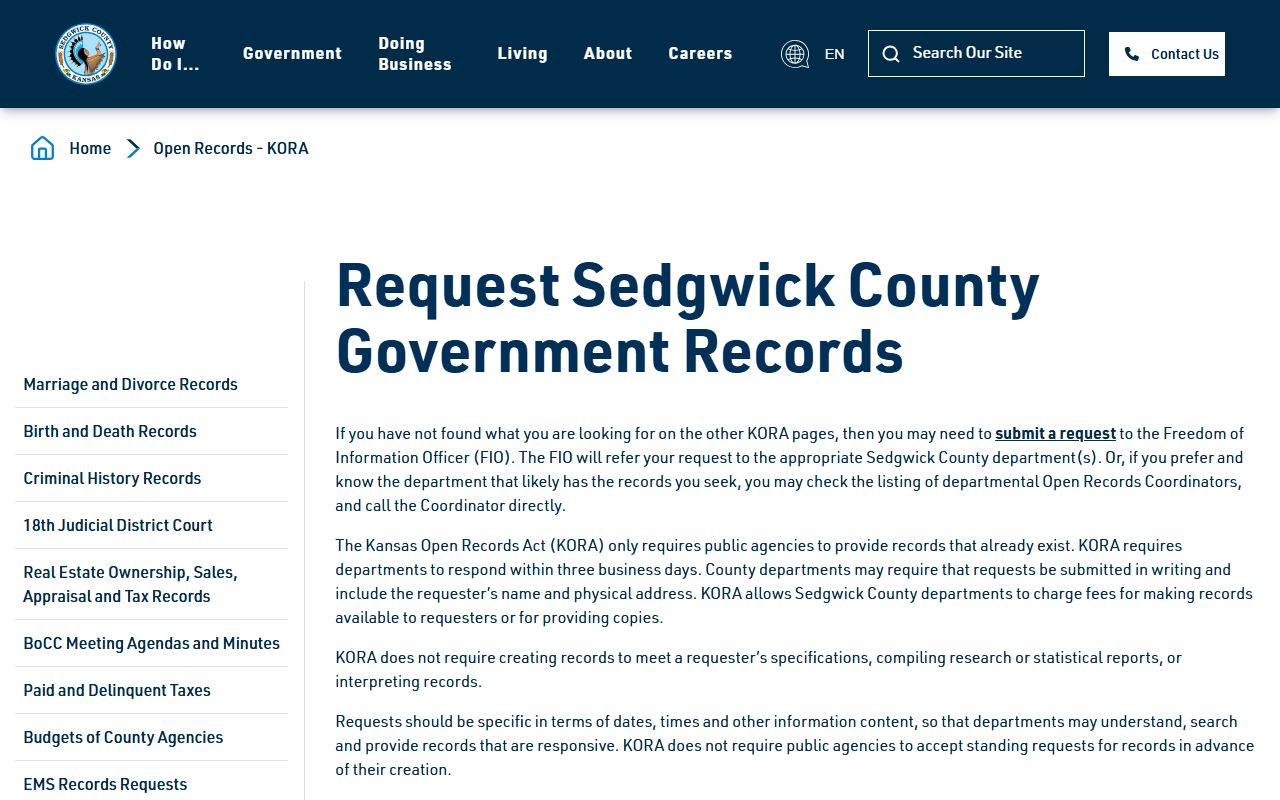
There is no single statewide form, so the request can be a short, clear letter or the county's web form. What matters is that it identifies the requester, gives contact details, and describes the records well enough for the agency to find them. A KORA request generally includes the fields below.
| Request Field | Type | Notes |
|---|---|---|
| Requester name | Text | Who is asking for the records. |
| Contact information | Text | Phone, email, or mailing address. |
| Records description | Text | Specific description so the agency can locate them. |
| Department / custodian | Text | The county office that holds the record. |
Fees and Response Time
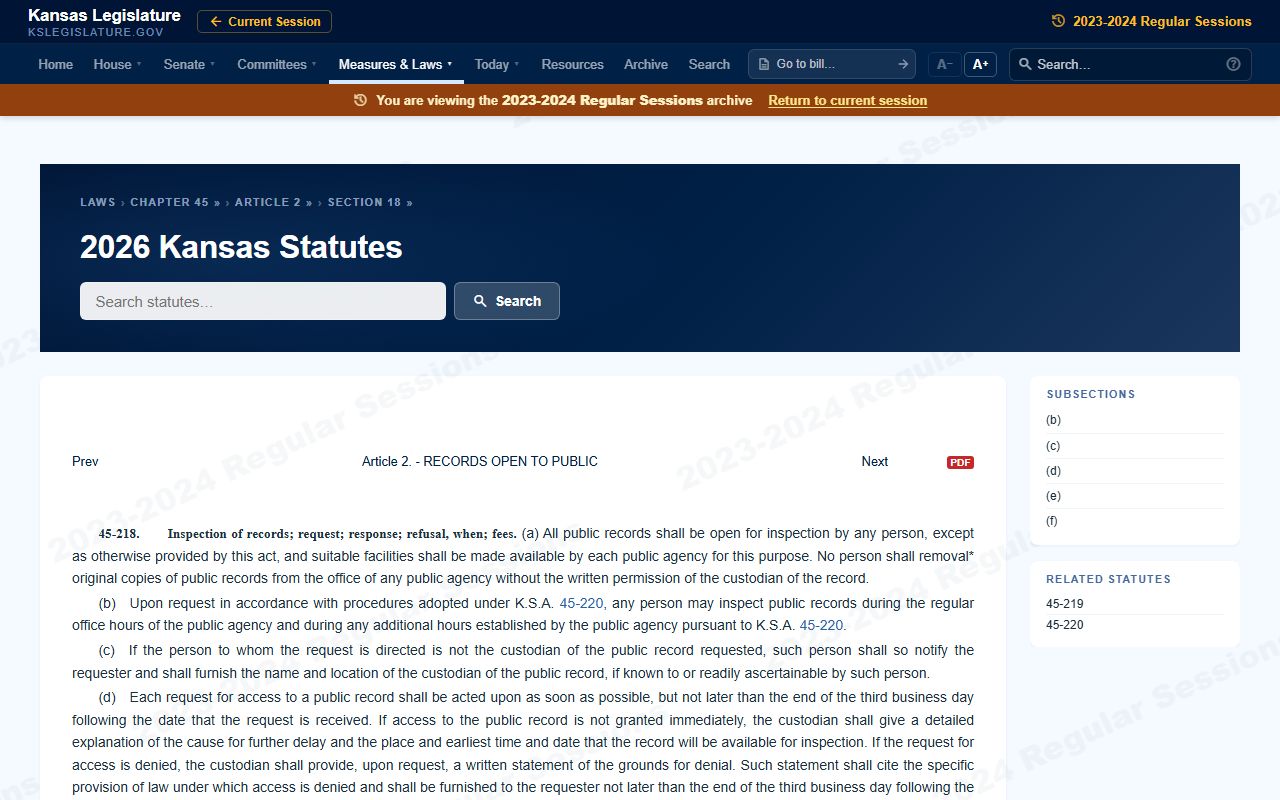
KORA sets a response rule, not a fulfillment deadline. The three-business-day rule means the department must respond, not that every record arrives in three days. The county may charge for staff time, copies, and making records available, and it can require payment before release. The governing statute on inspection, response, and fees is K.S.A. 45-218, shown below from the Kansas Legislature.
| Item | What to Expect |
|---|---|
| Response time | Within three business days |
| Staff time | Department may charge for time spent |
| Copies | Reasonable fee tied to actual cost |
| Payment | May be required before records are released |
Court fees are separate and follow judicial schedules rather than KORA. If a request is large or complex, the department may give a cost estimate first and ask for payment or a deposit before it starts. This is normal and lets you decide whether to narrow the request. A tightly written request that names dates, a department, and a record type usually costs less and comes back faster than one that asks for everything about a topic.
Closed and Redacted Records
Not every record is open. K.S.A. 45-221 lists records that are not required to be open, including criminal investigation records, personnel records, and medical records. A denial should cite the law, and a record can be partly open and partly closed, with the open parts separated where possible. Common redactions include Social Security numbers, account numbers, medical details, victim information, and juvenile data.
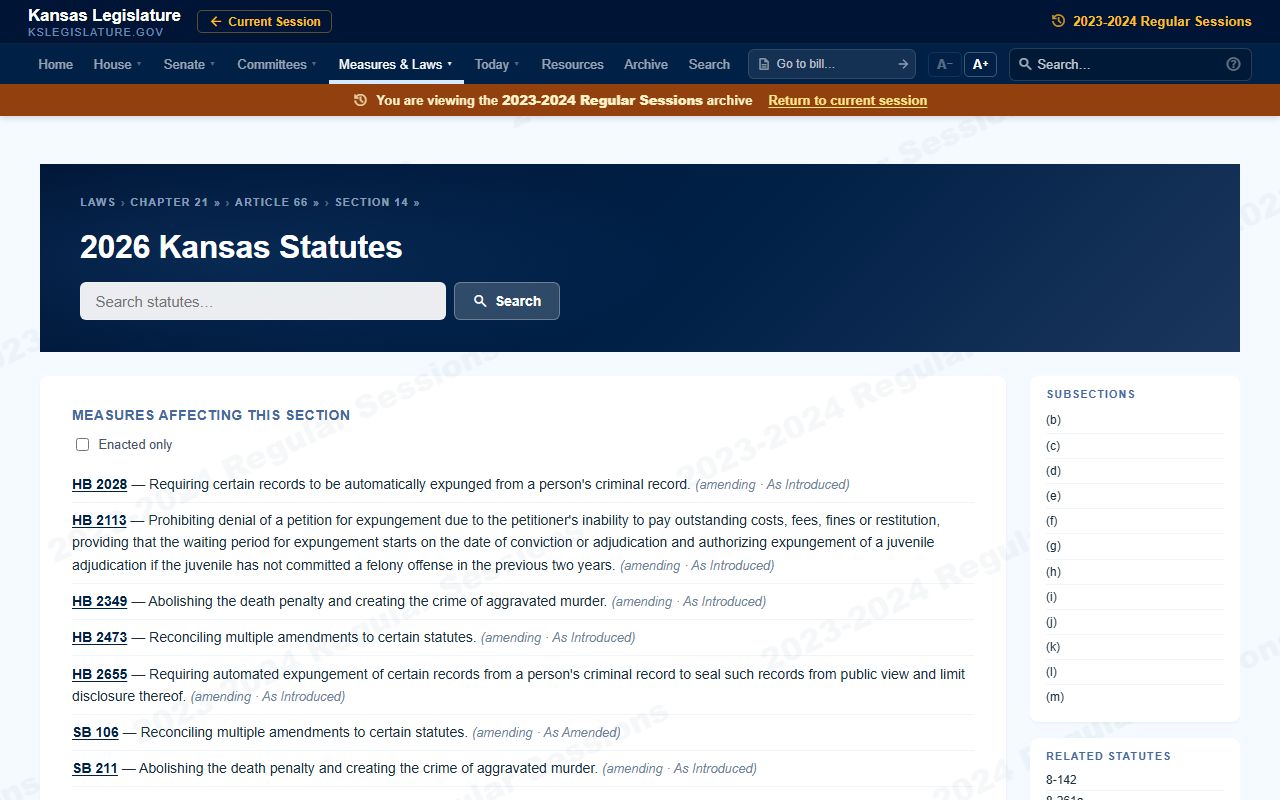
Expungement is a related path that closes a record by court order. Two statutes do most of the work. K.S.A. 21-6614 covers expungement of certain convictions, arrest records, and diversion agreements, shown below from the Kansas Legislature.
A separate statute, K.S.A. 22-2410, governs arrest-record expungement, including mistaken-identity cases. It is shown here from the Kansas Revisor of Statutes.
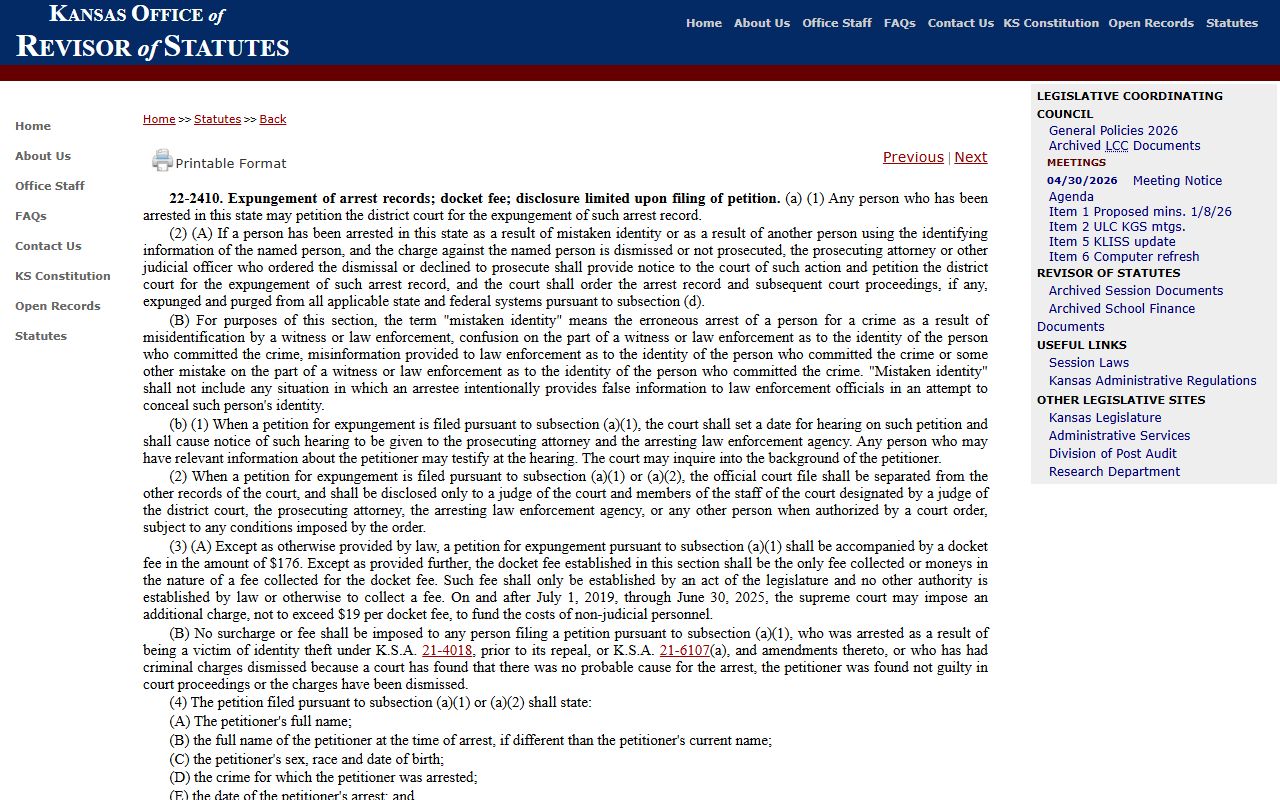
The arrest records page covers how to file an expungement petition. If you believe a county denial was wrong, KORA has remedies. The Kansas Attorney General publishes guidance on the act and can receive complaints about improper denials. A written denial that cites the law gives you a clear basis to review or challenge it. Court-record disputes follow a different route, through the clerk, the chief judge, and Supreme Court rules rather than ordinary county KORA channels, which is one more reason to send each request to the right custodian from the start.
Law Enforcement and Vital Records
Law enforcement records get special treatment under KORA. Criminal investigation records can be closed, so a sheriff record request may be granted, denied, or redacted depending on the file and the law. For records the Sheriff posts online, such as the jail roster and the warrant search, no request is needed. The county's agency contact list names custodians for the sheriff, district attorney, county clerk, register of deeds, and others, which helps a request reach the right desk.
Vital records follow yet another track. Marriage and divorce certificates come from the state Office of Vital Statistics for qualified people, while the full court file comes from the District Court. The marriage and divorce records page covers both. For court case files of any type, the court records page explains the portal and the records office.
Note: A KORA request cannot force an agency to create a record or answer a question; it reaches only records that already exist.