
How to Find Recently Released Sedgwick County Inmates
Start by understanding what the county publishes. Sedgwick County offers a current-custody inmate search, not a historical release list. The disclaimer on that tool stresses that it covers people currently in custody and may not reflect a person's actual location. So when a name disappears from the roster, the change itself is the clue that a release, transfer, or bond may have happened. The system does not announce a release; it simply stops showing the person.
Because of that, the surest first step is to search the current roster and note whether the person still appears. If they are gone and the timing matters, move straight to a phone call. A release can flow from a bond, an own recognizance order, a dismissal, a sentence completion, or a move to another agency, and the roster will not tell you which. The Sedgwick County inmate records page explains the current-custody search in full.
- Run the current-custody inmate search by name.
- Note whether the person still appears in custody.
- If they are gone, call the jail to confirm the release.
- For ongoing alerts, register with VINELink.
- For prison or federal custody, use the state or federal locator.
What a Release From the Sedgwick County Jail Means
The word released covers a lot of ground, and the roster will not spell out which path applied. A person who vanishes from current custody may have done so for several reasons. Reading the situation correctly keeps you from acting on a wrong guess, especially when a court date, a bond, or a safety concern is involved.
- Bonded out on a cash, own recognizance, or surety bond.
- Released after a dismissal or completion of a sentence.
- Transferred to another agency or moved to state custody.
- Taken on a federal hold or sent to an out-of-county facility.
- Still in custody but recently re-housed, with the screen briefly behind.
Each of these leaves the current-custody search blank for that person, yet the legal meaning differs sharply. A bond release with an active court date is very different from a sentence completion or a transfer to prison. That is why the next step is almost always a phone call, and why a notification service helps when you need to follow a status over time. The Sheriff's disclaimer underscores the point by warning that the data may not reflect a person's actual current location.
Confirming a Release in Person or by Phone
For anything time sensitive, the phone beats the website. The jail main line at (316) 660-5245, also dialed as 660-JAIL, reaches detention staff who can confirm a custody change. This matters for a pickup, a bond, a court appearance, or a service of process, where a wrong assumption can cause real harm. The office repeatedly tells the public to confirm by phone rather than rely on screen data alone.
For an official record of the dates a person was held, the jail lobby provides a face sheet for $0.25 on weekdays from 8:00 AM to 4:30 PM. A rap sheet, used for identity needs, is free within 24 hours after release and $0.25 after that, and a person may request only their own information unless a court order allows otherwise.
Important: Do not arrange a pickup or transport based only on a website result. Call the jail first, and bring valid ID, because a person with another hold may not actually be released.
Property and Money Release
When a person leaves custody, their money and property must be released too. These releases happen in the jail front lobby at 141 W Elm, seven days a week from 6:00 AM to 10:00 PM. The receiving party must be present, must show a physical copy of an unexpired ID, and the release happens only once. Wait times can be long, and the jail recommends avoiding the shift-change windows of 6:30 to 7:15 AM and 2:30 to 3:15 PM.
The release of inmate money and property page is shown below from Sedgwick County.
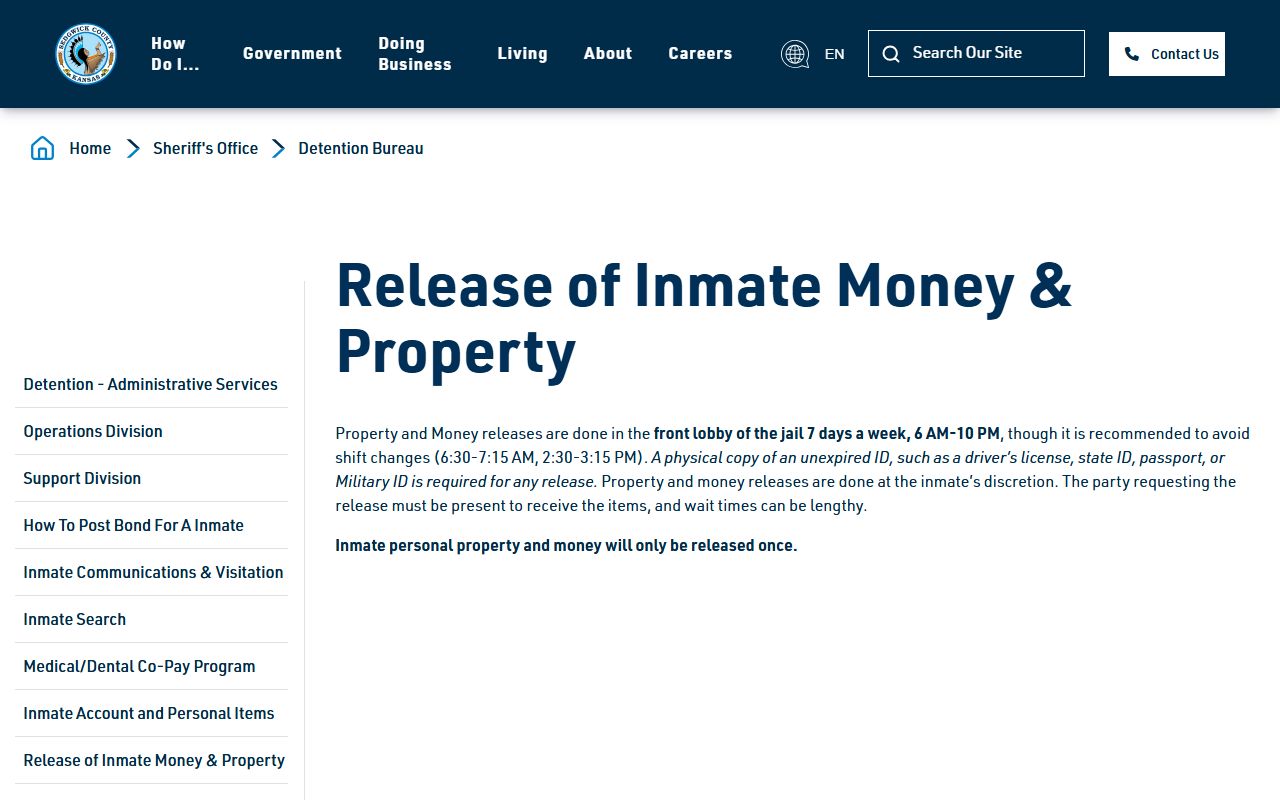
If an inmate is housed out of county, money in the Sedgwick account may be held until they return.
The money and personal items policy adds detail on deposits and pickup. It is shown here from the money and personal items page.
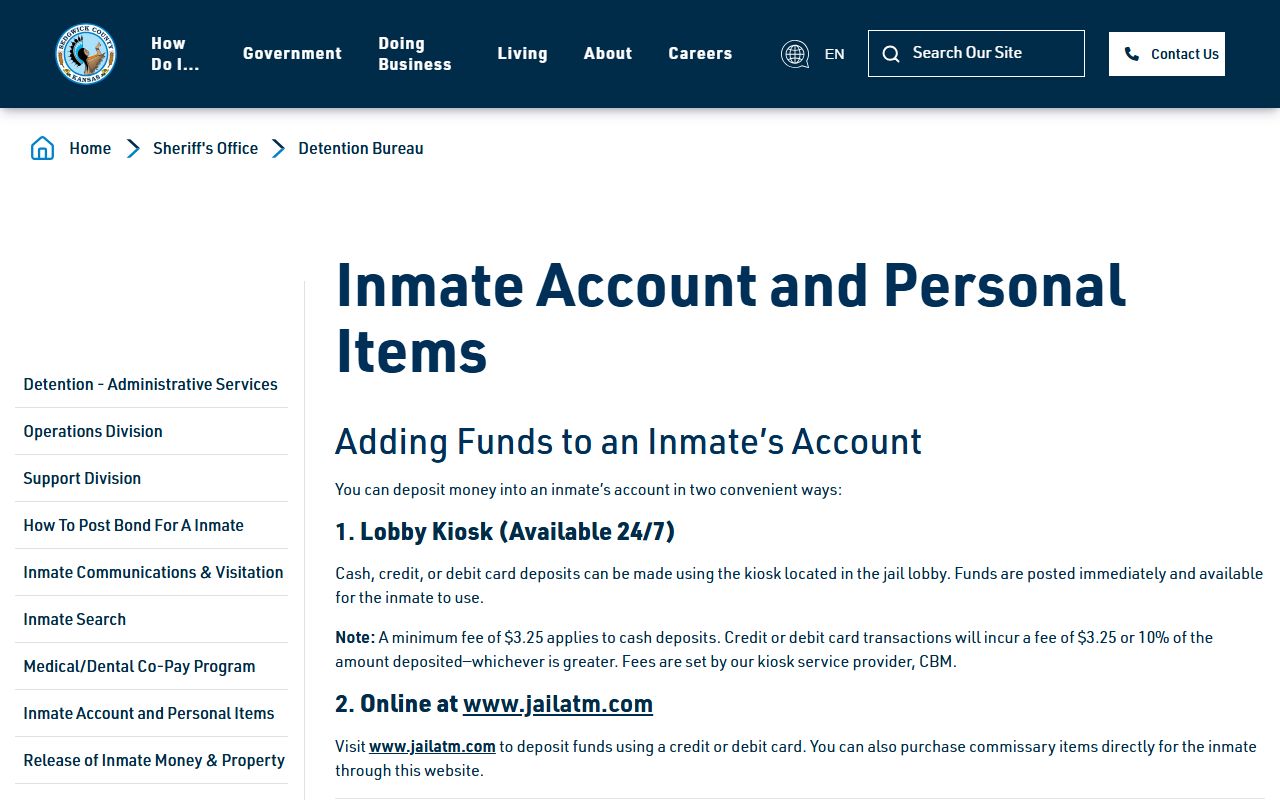
Releases are at the inmate's discretion, so the property goes to the person they name.
Setting Up Release Notifications With VINELink
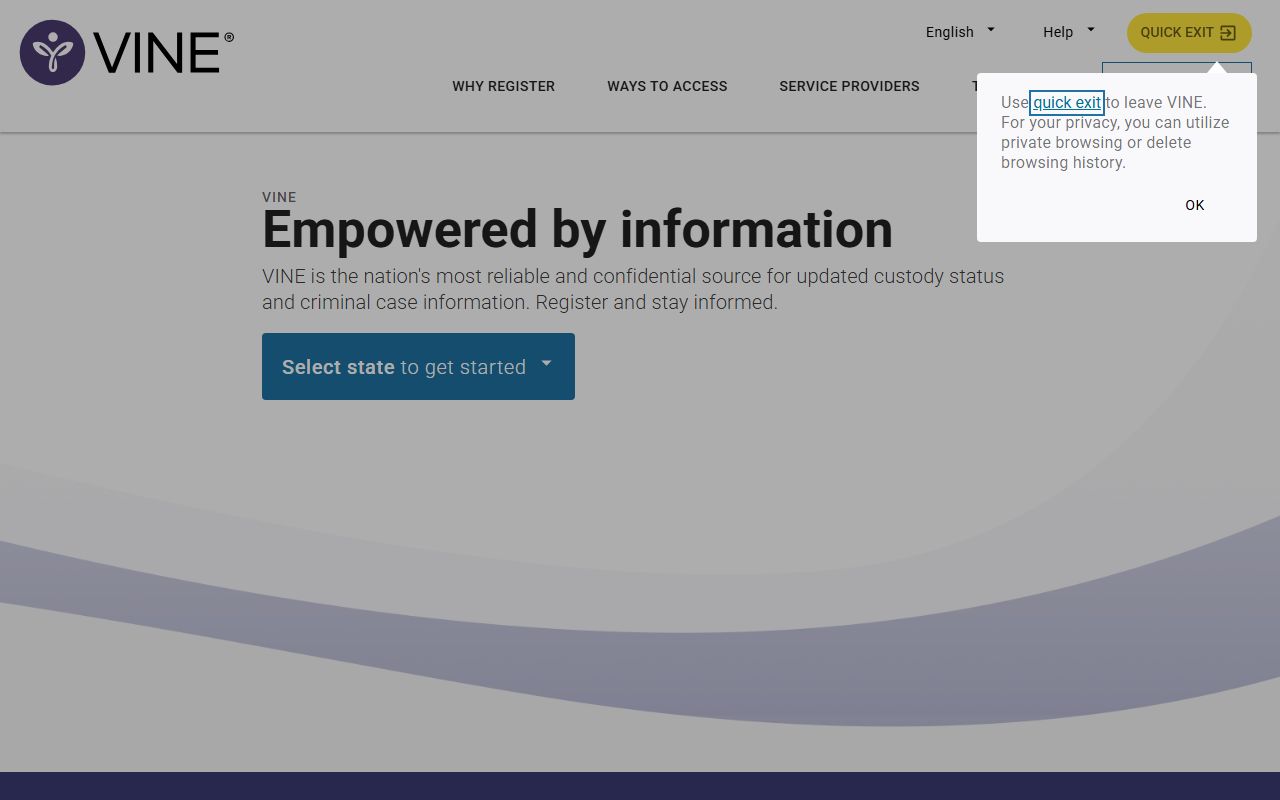
If you want to know the moment a custody status changes, a notification service is the tool. VINELink is a public custody and release notification system. You select the state and agency, search for the offender by name or ID, and register for alerts by phone, email, or text where those options exist. It is best used as a supplement to a jail call, not a replacement, because notification systems can lag and should be paired with direct contact for urgent safety planning.
The VINELink portal is shown below from vinelink.com.
Victims who need release alerts can also work with the District Attorney's Victim and Witness Division, which provides notice required by state law and helps coordinate safety planning. Pairing a VINELink alert with that office gives a stronger safety net than either one alone, since a single missed notification should never be the only warning of a release.
Searching State and Federal Released Inmates
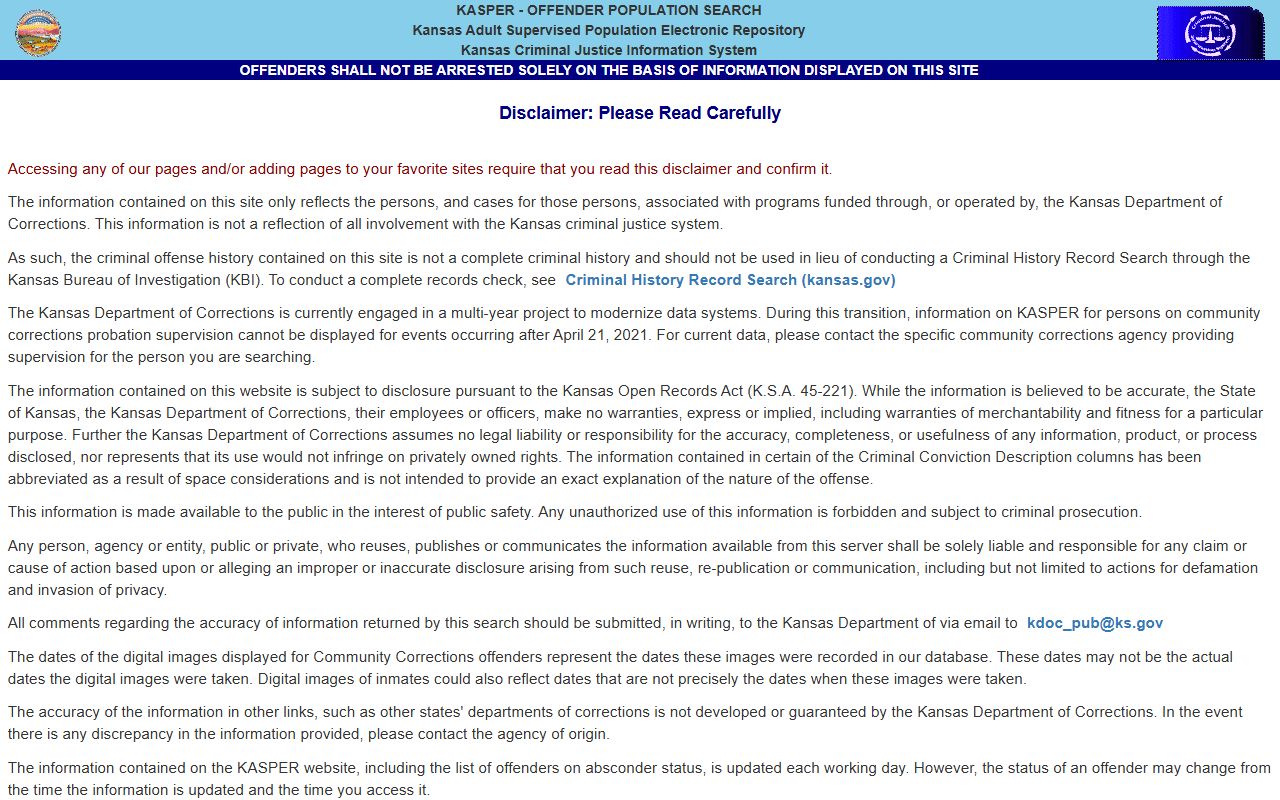
A person released from the county jail may later appear in state or federal systems, and those use separate tools. The Kansas Department of Corrections runs KASPER, the Kansas Adult Supervised Population Electronic Repository, for state prison custody, parole, and post-release supervision. It is not the place to verify someone held pretrial in the county jail today. The federal Bureau of Prisons locator covers federal inmates from 1982 forward.
The KASPER search is shown below from the Kansas DOC repository.
| Field Label | Type | Required | Notes / Format |
|---|---|---|---|
| Offender Name | Text | One of name or number | Search KDOC supervised population by name. |
| KDOC Number | Text | One of name or number | State ID number when known. |
The federal locator uses a wider set of fields. It is shown here from the BOP inmate locator.
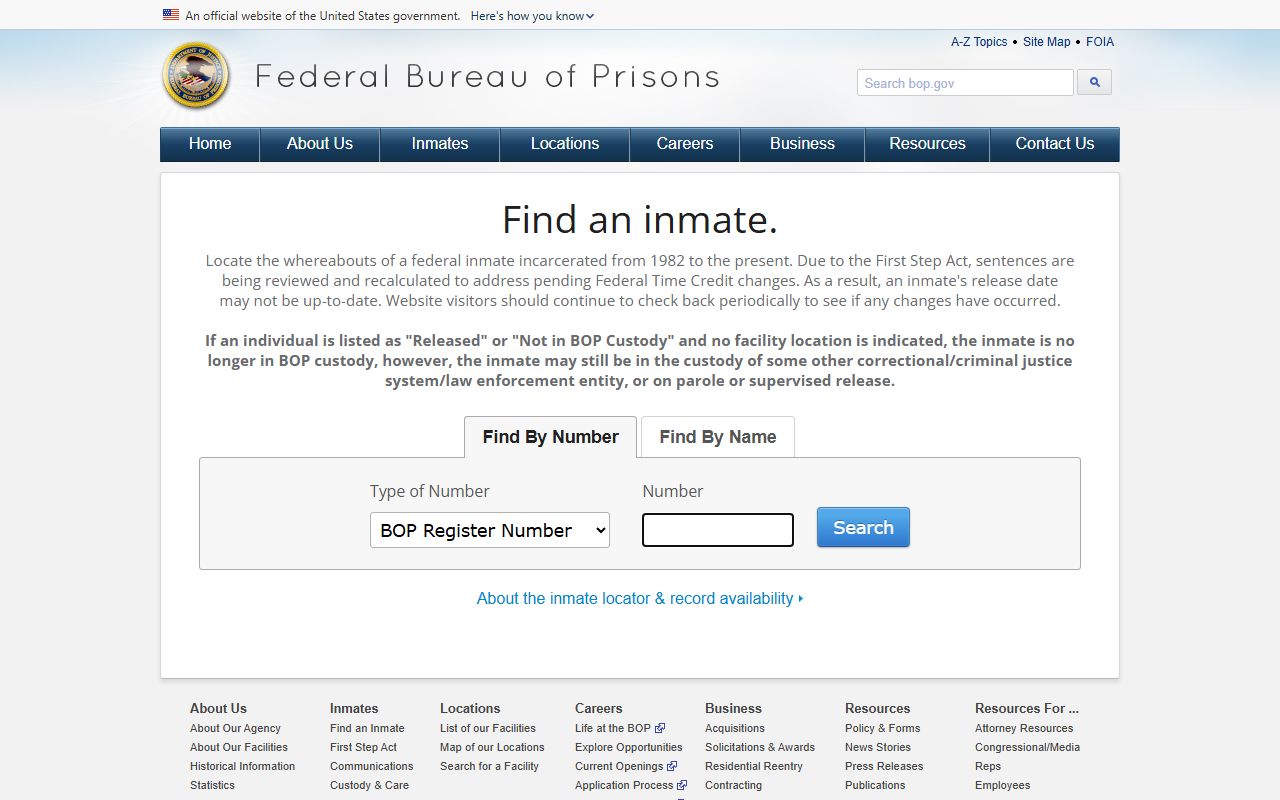
| Field Label | Type | Required | Notes / Format |
|---|---|---|---|
| BOP Register Number | Text | No | Also accepts DCDC, FBI, or INS numbers. |
| First / Last Name | Text | No | Name search path. |
| Race / Sex / Age | Dropdown | No | Filters to narrow a name search. |
Federal pretrial detainees held under Marshals contracts may not show as sentenced BOP inmates, so confirm federal holds through the court or counsel. The key idea across all three systems is that they answer different questions. The county roster answers who is in the local jail now. KASPER answers who is under state prison custody or supervision. The BOP locator answers who is in federal prison. A person sentenced from a Sedgwick County case may leave the county jail and surface later in KASPER, so the right tool depends on where the person is in the process.
The Sex Offender Registry After Release
A registered offender search is a post-conviction public-safety registry, not a jail release roster. Kansas participates in a community notification system that includes a Sedgwick County office. A registry record can show identifying information, conviction or offense data, and compliance status, with search options that vary by name, address, or area. It is a separate system, so do not assume a registered person is currently jailed or recently released unless the registry or the jail says so.
| Field Label | Type | Required | Notes / Format |
|---|---|---|---|
| Name | Text | No | Search the registry by offender name. |
| Address / Area | Text | No | Geographic search options vary. |
| Agency / Office | Filter | No | Includes the Sedgwick County office. |
Use the registry for public-safety awareness, and use the jail or court for current custody and case status.
Parole, Probation, and Reentry Resources
Release often comes with supervision. State prison release can include parole or post-release supervision tracked by the Kansas Department of Corrections, while local supervision runs through the county. Reentry support helps people return to the community and reduces the odds of a new offense. Sedgwick County's Department of Corrections offers adult field services, residential and service center programs, and juvenile services from its Hydraulic Street campus.
Other help is available across the area. COMCARE provides mental health and substance support, and the Wichita-Sedgwick County Addiction Intervention Coalition connects people to treatment. Kansas Legal Services assists with expungement and civil legal needs that often follow a release. The Veterans Treatment Court also draws on a support network that includes the VA, the District Attorney, the Department of Corrections, and the Sheriff's Office, which can matter for a justice-involved veteran returning home. Lining up housing, treatment, and legal help early tends to make the transition smoother and lowers the chance of a new case.
Sedgwick County Dept. of Corrections
700 S Hydraulic
Wichita, KS 67211
(316) 660-7003
Civil Rights Restoration After Release
Coming home raises questions about rights. Kansas generally restores voting rights after a person completes their sentence, including any post-release supervision. Firearm rights are more complex and depend on state and federal conviction law, plus any expungement or pardon, so broad claims should be avoided. A person with questions about a specific situation should seek legal advice rather than rely on a general rule.
Clearing a record can also matter after release. The arrest records page covers how Kansas expungement works, and the public records page explains how to request related files. Court dates may stay active after release, so check the court records portal for any pending matters. A protection or no-contact order can also limit who may pick up or contact a released person, so confirm any order before planning a reunion or a pickup.