
Searching Sedgwick County Court Records
These questions cover the basics of finding a case and what is or is not online.
How do I search Sedgwick County court records?
Use the Kansas District Court Public Access Portal at casesearch.kscourts.gov, or visit the DC18 Records Department on the 6th floor at 525 N Main. The portal needs a free account and a robot check, and you can search by party name or case number. For certified records, call Records at (316) 660-5900. The court records page walks through the full process.
Are all court records online?
No. Kansas Supreme Court Rule 22 keeps many case types off the public portal, such as adoptions, juvenile cases, protection orders, and expunged records. Some public files can be viewed only at a courthouse terminal, and older files may exist only on microfilm. The court records page lists the restrictions in detail.
How do I find today's court docket?
DC18 posts a daily docket that updates every 15 minutes, plus seven-day calendars by case type. Use the browser find tool to jump to a name fast. The court dockets page links the daily and weekly calendars and explains how to read an entry.
Is the county clerk the same as the court clerk?
No. The Sedgwick County Clerk is a county-government office, while court files are held by the Clerk of the District Court and the DC18 Records Department. That difference matters for marriage, divorce, criminal, civil, probate, and traffic records. The Clerk of the District Court page explains the distinction.
Jail, Inmate, and Warrant Records
These questions cover custody, releases, and warrants handled by the Sheriff's Office.
How do I see who is in jail?
Use the Sheriff's inmate search, which lists people currently in custody by first and last name. The tool includes a public-record disclaimer and may not reflect a person's actual current location. For confirmation, call the jail main line at (316) 660-5245. The inmate records page covers the roster in full.
How do I check for a warrant?
Use the Sheriff's warrant search and enter a last and first name. The Sheriff warns that results are possible active warrants, not confirmation or probable cause, so do not act on a result alone. Contact the Warrant Section at (316) 660-3960 for instructions. The warrant records page explains warrant types.
How do I confirm an inmate was released?
The county does not publish a release list, so search the current-custody roster and call the jail if the person no longer appears. For ongoing alerts, register with VINELink. The released inmates page covers verifying a release and state and federal locators.
How do I put money on an inmate account?
Use the lobby kiosk at the jail, open 24 hours, or JailATM.com. The kiosk takes cash, credit, and debit, and credit or debit deposits carry a fee. Cash and money orders are not accepted by mail. The inmate records page lists the deposit methods and visitation hours.
Can I pick up an inmate's property?
Yes, if the inmate directs it. Property and money releases happen in the jail front lobby seven days a week, from 6:00 AM to 10:00 PM. Bring a physical unexpired ID, expect possible wait times, and know that a release happens only once. The released inmates page covers the lobby hours and rules.
Who is the Sheriff?
Sheriff Jeffrey T. Easter is the 40th Sheriff of Sedgwick County and has served since December 2012. The Sheriff's Office oversees law enforcement, detention, and judicial services and has more than 550 employees. The inmate records page covers the detention facility the office runs.
Marriage, Divorce, and Probate Records
These questions cover records the District Court and the state hold for families.
Where are divorce records kept?
The county says divorce records are maintained by the 18th Judicial District Court, not county government. The state can issue a divorce certificate for divorces since 1951 to qualified people, but only the District Court can provide the full decree and case file. The marriage and divorce records page explains both.
How much is a Kansas marriage license?
Kansas Self-Help lists the marriage license fee as $85.50. The online application asks for an email address, personal details for both applicants, and online payment by card or electronic check. After the ceremony, the completed license returns to the District Court. The marriage and divorce records page covers the steps.
What court handles probate?
The Probate Department of the 18th Judicial District Court handles probate at 1900 E Morris St in Wichita. It covers estates, guardianships, conservatorships, care and treatment, and adoptions, and the last two are confidential. The probate records page explains case types and how to search.
Traffic and Criminal Court Records
These questions cover tickets, charges, and clearing a record.
What court handles traffic tickets?
The DC18 Traffic Department handles citations from the Sedgwick County Sheriff and the Kansas Highway Patrol, mostly on county and state highways outside city limits, plus appeals from municipal courts. It sits on the 7th floor at 525 N Main. The traffic court records page covers paying and contesting a ticket.
Can I expunge a Kansas criminal record?
Possibly, depending on the offense, the waiting period, sentence completion, and registration status. K.S.A. 21-6614 and K.S.A. 22-2410 are the key statutes. A person files a petition in district court and can expect agency notice if a judge grants it. The arrest records page explains the process.
Are juvenile records public?
Juvenile records are restricted. Rule 22 keeps juvenile care cases and juvenile offender documents off the public portal, and K.S.A. 38-2309 governs juvenile offender files with special rules for young juveniles and victim identity. The court records page lists the closed case types.
What is the small claims limit?
Small claims covers recovery of money or property up to $10,000. Attorneys are generally not used and there is no jury, so the judge hears and decides the case. Hearings run Monday through Thursday at the main courthouse. The District Court page covers small claims filing and forms.
Access, Federal Cases, and Legal Help
These questions cover open records, federal cases, and where to get help.
What is KORA?
KORA is the Kansas Open Records Act, K.S.A. 45-215 and following. The county says it gives any person the right to inspect and obtain public records unless they are closed by law, and departments generally respond within three business days. The public records page explains how to file a request.
How do I find federal cases from Sedgwick County?
Federal cases are not in the state portal. Use PACER for the U.S. District Court and the U.S. Bankruptcy Court for the District of Kansas, and the Tenth Circuit for appeals. The federal appeals court page is shown below.
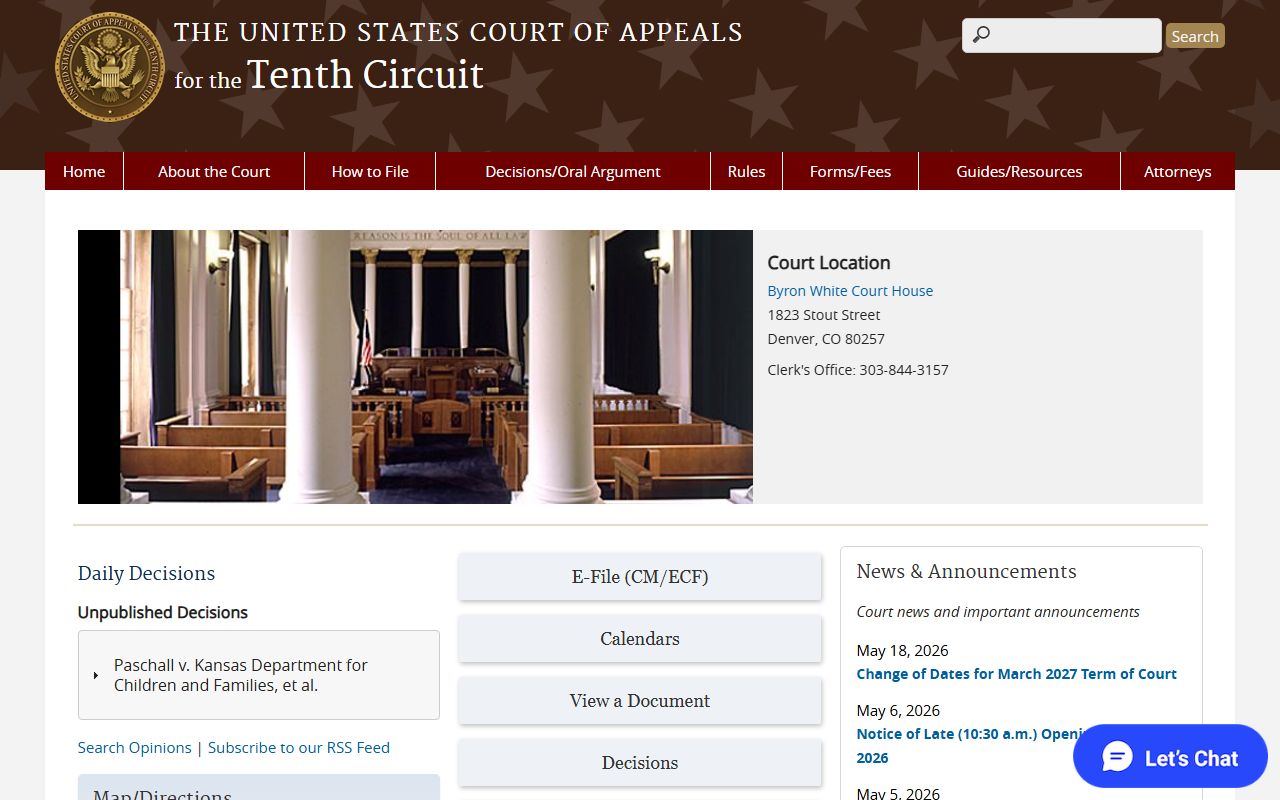
The Tenth Circuit hears federal appeals from the District of Kansas, and the District Court page covers the federal trial courts.
Where can I get free legal help?
Kansas Legal Services offers legal aid, self-help, and interactive forms for people who qualify, and DC18 links it for small claims and other matters. The organization's page is shown below.
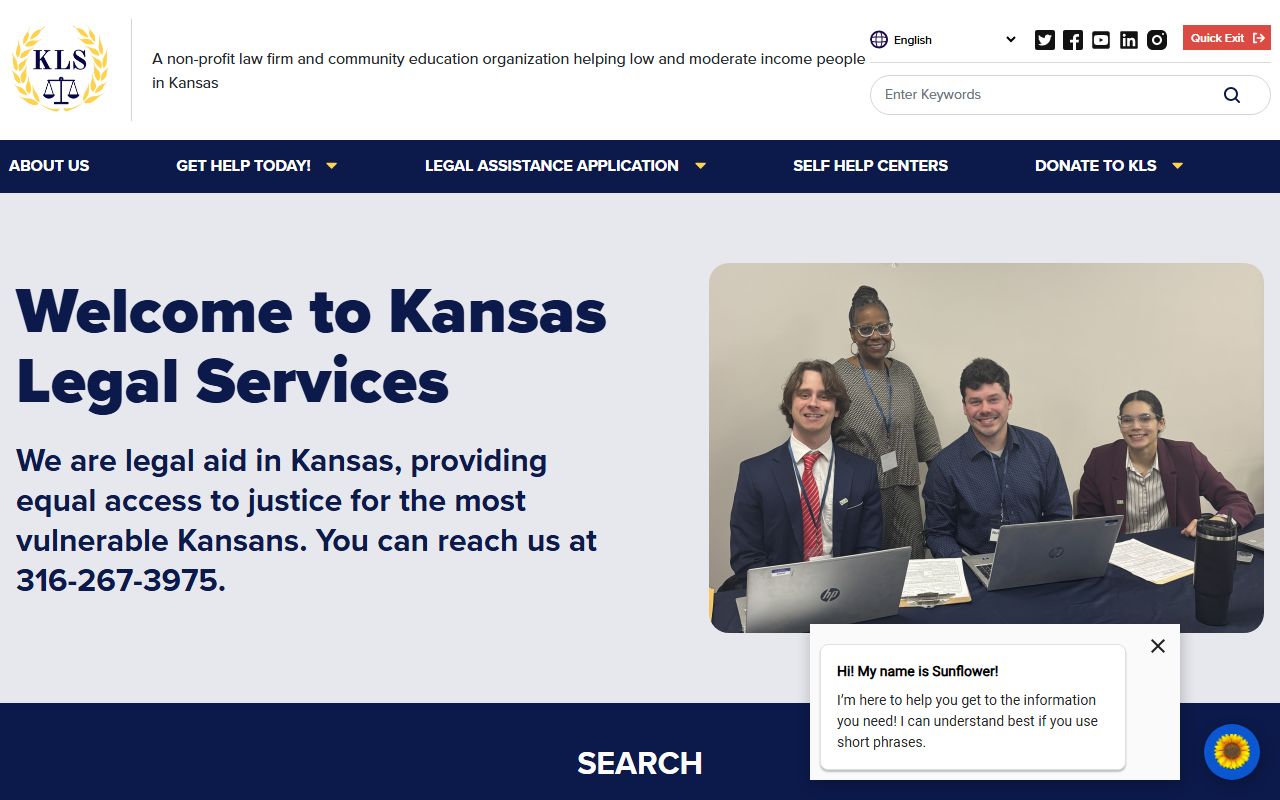
For self-represented filers, Kansas Legal Services is a key resource, and the marriage and divorce records page links state self-help forms.
Does the court offer mediation?
Yes. DC18 maintains local mediation resources for parties who want to resolve a dispute outside a full trial. Mediation can help in family and civil matters. The DC18 mediation page is shown below.
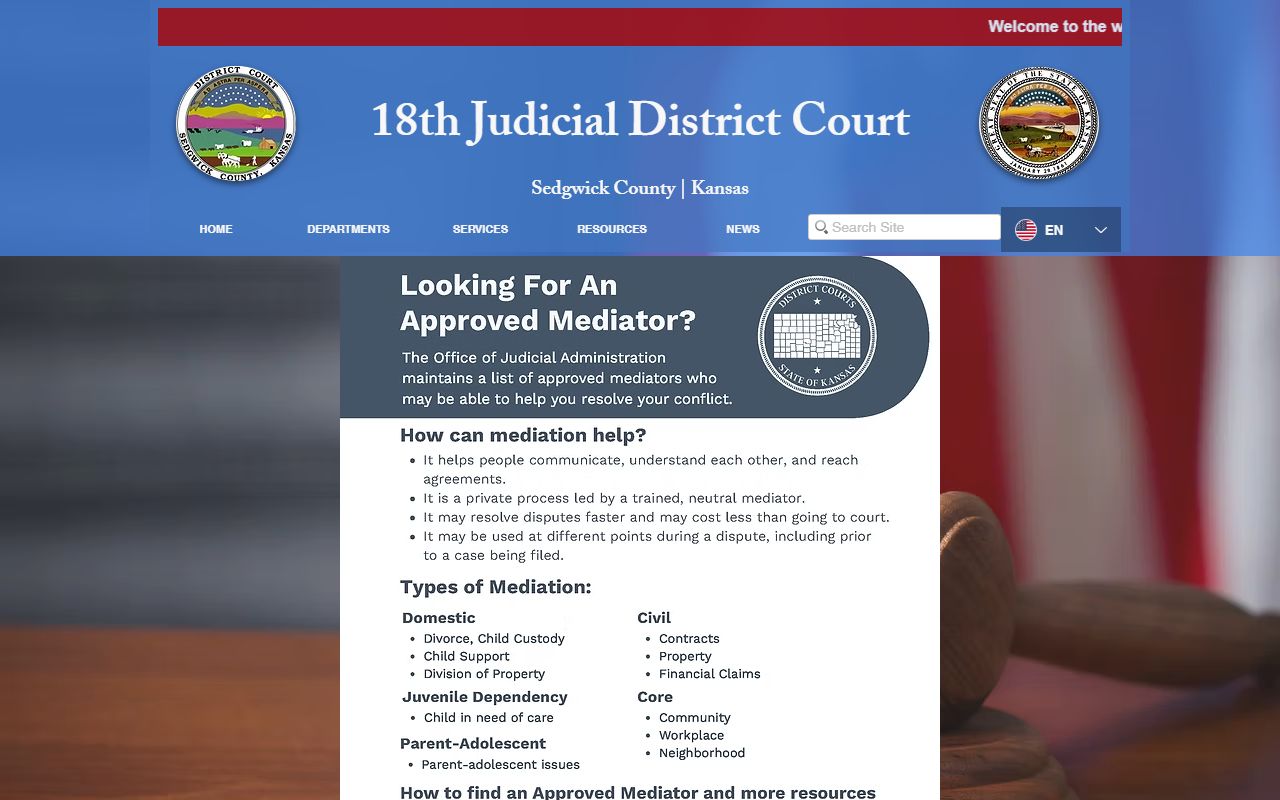
The DC18 mediation page lists local options, and the court records page covers the case files behind these disputes.
Who is the District Attorney?
Marc Bennett is the District Attorney for the 18th Judicial District, with an office at 535 N Main in Wichita. The office handles criminal, juvenile, consumer, and traffic functions and runs victim services and diversion programs. The arrest records page covers the DA's diversion guidelines.
How do I request ADA accommodations?
Contact ADA Coordinator Joni Wilson in Court Administration on the 11th floor at 525 N Main, by phone at (316) 660-5801 or TDD 711. The court asks for requests as soon as possible, or at least five working days before a proceeding. The District Court page covers courthouse access and hours.
Can clerks give legal advice?
No. DC18 staff can provide forms, filing information, fee details, and procedure, but they cannot give legal advice or tell a person what to file. For strategy, talk with an attorney. The Clerk of the District Court page explains what the records office can and cannot do.